
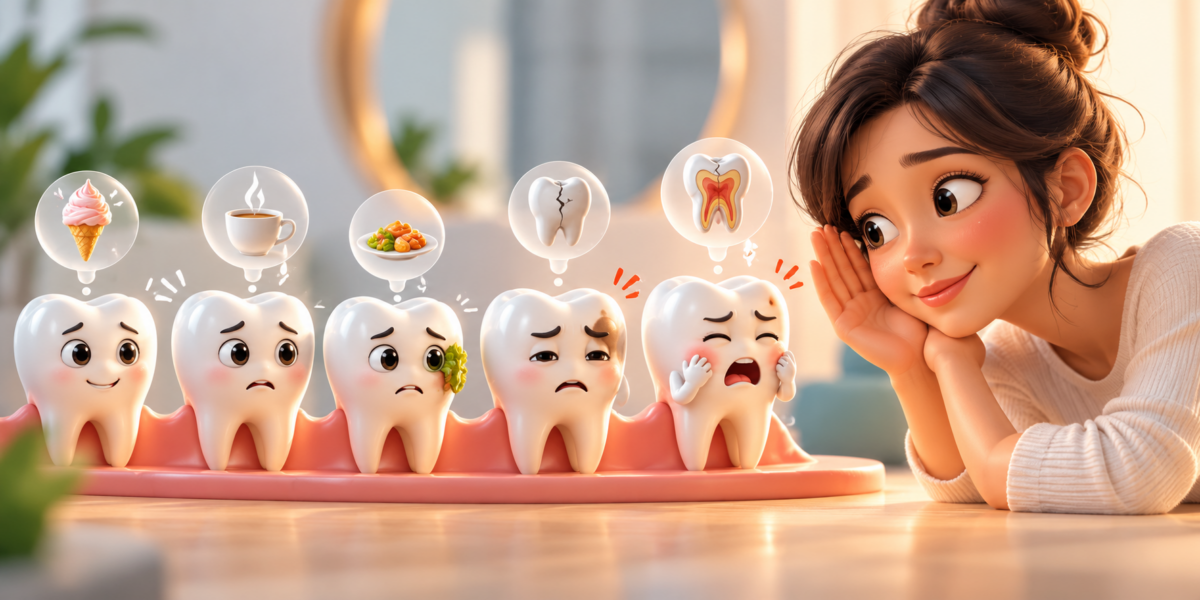
A tooth rarely goes from perfectly fine to severely painful without a story in between. More often, it whispers first: a little sensitivity to cold, discomfort while chewing, occasional food getting stuck, or a mild ache that disappears as quickly as it arrives. The problem is that we often start listening only when that whisper becomes a shout.
At Dr. Juhi’s Confident Dental Clinic, dental awareness begins with understanding these early signals and recognising why they matter.
Pain Is Often a Late Signal
One of the biggest misconceptions about dental health is that a tooth problem always causes obvious pain. In reality, dental decay, gum problems and infections can progress quietly for a considerable time.
A small cavity may initially affect only the outer layers of the tooth. As decay progresses deeper, it can approach the sensitive inner part containing nerves and blood vessels. This is when sensitivity or pain may become more noticeable.
In simple terms, the earlier a problem is identified, the more opportunities there may be to manage it conservatively.
What Is Your Tooth Trying to Tell You?
Not every unusual sensation means a serious dental problem, but repeated or persistent symptoms deserve attention.
Sensitivity to Cold or Hot
A brief sensation when drinking something cold may have several causes, including enamel wear, gum recession or early decay. If the sensitivity becomes frequent, intense or lingers after the stimulus is gone, it should not simply be ignored.
Pain While Chewing
Discomfort when biting can sometimes be associated with decay, a damaged filling, a crack or inflammation around the tooth. The location and nature of the pain can provide valuable clues during a dental examination.
Food Getting Stuck Repeatedly
If food consistently becomes trapped between the same teeth, there may be a cavity, an irregular filling, gum changes or another underlying issue. Your teeth should not require a daily negotiation with your dinner.
Occasional Toothache
A toothache that comes and goes may seem harmless because it eventually disappears. But disappearing pain does not necessarily mean the underlying problem has disappeared. Some dental conditions can continue progressing even when symptoms temporarily settle.
Why Early Attention Matters
Dental treatment is often simpler when a problem is identified early. Early-stage decay may sometimes be managed with preventive or minimally invasive approaches. Waiting until pain becomes severe can mean that the damage has progressed further and more extensive treatment may be required.
This is particularly important because teeth cannot repair significant structural damage in the same way that skin heals a small cut.
Listen Before It Shouts
Your teeth communicate through small changes: sensitivity, discomfort, swelling, bleeding gums or changes while eating. These signals are worth noticing.
Good dental care is not simply about treating pain when it arrives. It is about recognising problems early, protecting healthy tooth structure and preventing small concerns from becoming bigger ones.
Sometimes, the smartest dental decision is simply listening to your tooth a little earlier.