
By Dr. Juhi’s Confident Dental Clinic
Thumb sucking is a natural reflex in infants and young children. It provides comfort, helps them feel secure, and can even aid in falling asleep. While this habit is generally harmless during the early years, prolonged thumb sucking—especially after the eruption of primary (baby) teeth—can lead to significant dental and developmental concerns.
At Dr. Juhi’s Confident Dental Clinic, we believe that early awareness and guidance can help prevent long-term oral health issues and ensure your child’s smile develops properly.
How Thumb Sucking Affects Dental Development
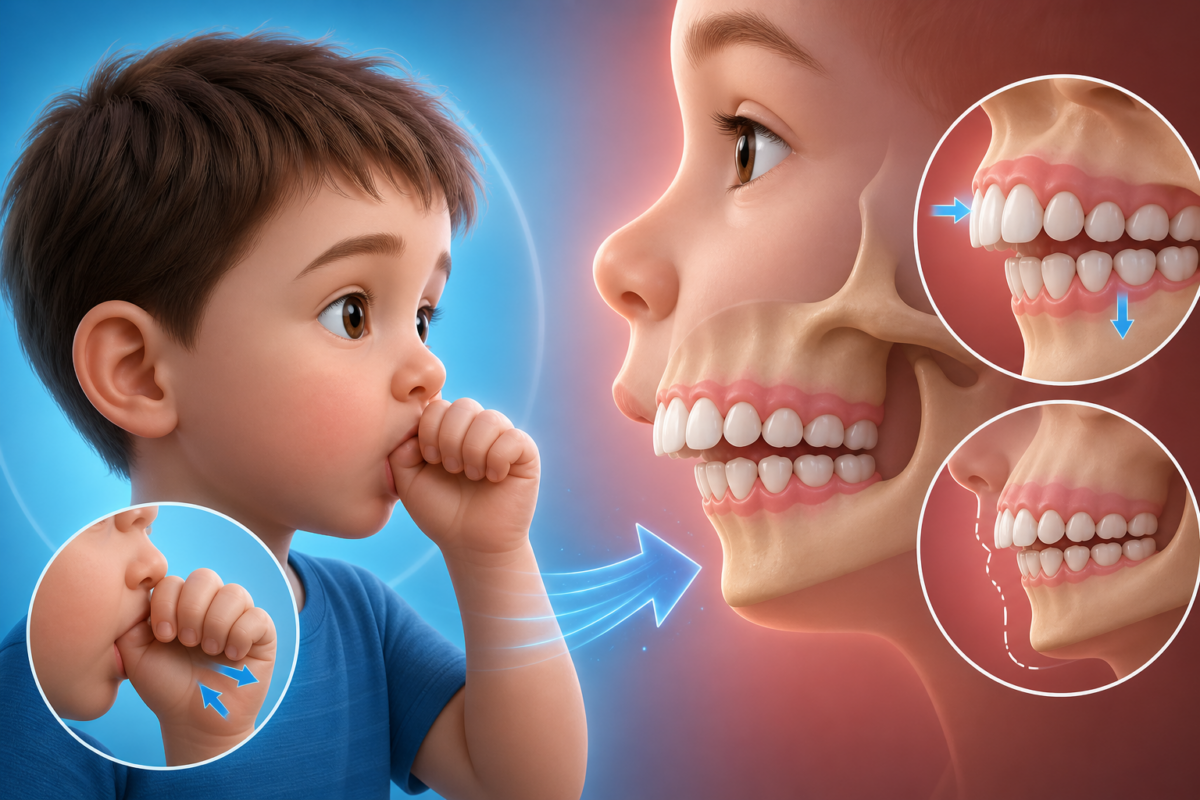
When thumb sucking continues beyond the toddler years, it begins to interfere with the normal growth of the mouth and jaw. The constant pressure of the thumb on the teeth and surrounding structures can gradually shift teeth out of their natural positions. This often leads to misalignment, commonly seen as protruding front teeth or an open bite where the upper and lower teeth do not meet properly.
In addition to affecting the teeth, persistent thumb sucking can alter the growth pattern of the jaw. The upper jaw may become more forward-positioned, while the lower jaw may lag behind, creating an imbalance in facial structure over time.
Speech and Functional Issues
Beyond cosmetic concerns, prolonged thumb sucking can also impact speech development. Misaligned teeth and altered jaw positioning may lead to difficulty in pronouncing certain sounds clearly. Children may develop speech impediments that require additional therapy to correct.
It can also affect normal swallowing patterns and tongue posture, further complicating oral function as the child grows.
Risk of Long-Term Orthodontic Problems
Children who continue thumb sucking after their permanent teeth begin to emerge are at a higher risk of requiring orthodontic treatment in the future. Braces or other corrective procedures may become necessary to realign teeth and restore proper bite function. Early intervention can often reduce the need for extensive treatment later on.
When Should Parents Be Concerned?
Most children naturally stop thumb sucking between the ages of 2 and 4. However, if the habit persists beyond this age—especially after permanent teeth start appearing—it is advisable to seek professional guidance.
Parents should watch for signs such as visible changes in tooth alignment, difficulty in closing the mouth properly, or changes in speech patterns.
Helping Your Child Break the Habit
Breaking the thumb-sucking habit requires patience and positive reinforcement. Gentle encouragement, identifying triggers (like stress or boredom), and offering alternatives such as comfort toys can be helpful. In some cases, a dentist may recommend habit-breaking appliances to discourage the behavior.
A Healthy Smile Starts Early
At Dr. Juhi’s Confident Dental Clinic, we are committed to guiding parents and children toward better oral health habits. Addressing thumb sucking early can prevent complications and support proper dental development.
If you have concerns about your child’s oral habits, schedule a consultation today. A proactive approach today can ensure a confident, healthy smile for years to come.